Imagine being six years old, translating a lease agreement or ordering everyone’s food at a restaurant—not because you want to, but because no one else can. I was reminded of this feeling during a conversation with my boyfriend a few weeks ago. He mentioned how he spoke on the phone with a child about one of his client’s properties. The reason? The child’s parents did not speak English, and they had a few questions for management. He expressed how strange it felt talking about something so serious with such a young person.
I began to reflect on my past experiences when I had to translate for my grandparents growing up. In moments like dining at a restaurant, it was up to me to order the food, drinks, or express anything requested. But my role as translator didn’t end there. Thankfully, I did not have the intense responsibility as the main translator in my family. As mentioned previously, my mother did an excellent job of assimilating to the language. I was blessed to have the majority of the burden lifted off of me.
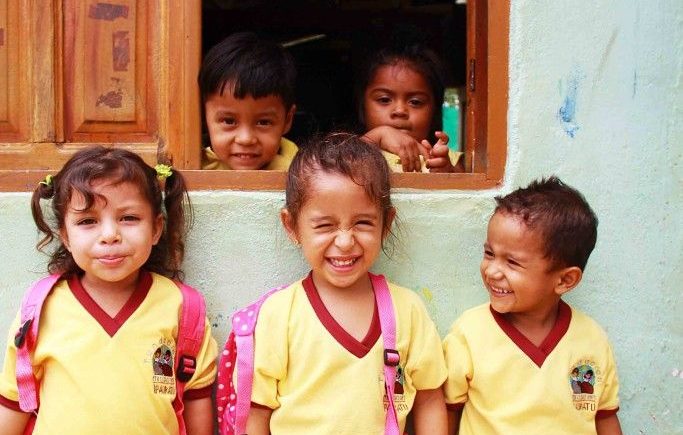
Yet, this tugs on my heart for the kiddos whose parents do not speak English at all. I am talking about children as young as four, trying their best to translate adult conversations. Can you imagine being in first grade, acting as the liaison between two adults? As nerve-wracking as it is for the child, it is equally as frightening for the adult. Many Latino parents feel deeply intimidated—embarrassed even— when trying to speak the language with others. Unfortunately, people do make fun of the Hispanic accent. I have seen the mocking first hand. It’s overwhelming to live in a new country, and it’s hard to adjust when you stick out like a sore thumb in an unforgiving environment.
I was constantly asked to demonstrate my ability to speak Spanish to non-Spanish speakers. In grade school, kids often found it impressive and unique. Looking back, I realize how many children (myself included) are placed in roles that blur boundaries between student, translator, and cultural mediator.
I had one experience in elementary school where my skills came to my school’s advantage. I was in second grade when I heard my name on the intercom. “Will Liz Levy please come to the principal’s office?” I arrive to the principal’s office, a bit nervous, as I was a shy girl. I had never been called to the front office before.
As I settle in the room, I notice the principal and the two front desk secretaries smiling.
“You have been chosen to be our star student,”
A rush of excitement runs through my little body as I anticipate what it means to be a star.
“We have an exchange student coming in from Puerto Rico. We are so lucky to have you with us at our school because you can help her! She does not speak any English and will be assigned to all of your classes. You are the only person who can speak Spanish. Are you able to help her?”
To be honest, all my little mind heard was: star student. Of course I went along with this. It felt like a job for super woman. And in this case, I was her pint-sized version.
I don’t want to burst what seems like a sweet moment. However, now as an adult, I can confidently say: this was not ethical. And while I laugh about it now, here’s why it’s no joke.
What do little girls do in their early stages of societal interaction? Hierarchy and drama. Ask any grade school counselor and I am sure they will have lots to share (with confidentiality I’m sure).
Ah, second grade love, the kind that feels like a Shakespearean tragedy, but flies by faster than my mom’s chancleta. Well, things got a bit messy with the new student from Puerto Rico, and she tried to steal my second grade boyfriend. AKA the love of my life, AKA the Troy Bolton to my Gabriela Montez. (I was in second grade during the High School Musical era). So guess what I did? Since she broke us up, I stopped translating for her.
Children really are that petty. As silly as that is, they should also not be responsible for someone else’s education. Translating for her was a distraction to me because I was trying to translate in real time. I was already trying to learn things on my own. Now my brain was working overtime trying to translate new knowledge into an entirely different language. My education was interrupted and sadly, her education suffered because of a personal conflict between two second graders. I was handed a job that should have been given to a professional translator.
I understand it’s convenient to have a Spanish speaking student, employee, etc., in house. Why not use a resource that’s right in front of you? Just because it is convenient, doesn’t make it right. At the very least, we need to draw the line when it comes to children.
This isn’t just a childhood issue. It happens in serious spaces too, like hospitals. On that note, it is unethical for a family member to translate for a non-English speaking relative at any medical appointment. Referring to my story above, unauthorized translators can hold back information, misinterpret, mistranslate, or manipulate a situation for the non-English speaking patient. It is the responsibility of the organization or business to provide a professional interpreter to ensure communication is clear, unbiased, and translated correctly. The same service should have been provided for the poor girl I punished for betraying me. Since no one was there to translate, her attendance eventually became nonexistent.
If I could go back, I would give both girls a hug and find a more appropriate solution. A dedicated language program or staff member could have ensured that she got the support she needed. While I’m sure they meant well, the decision placed an unfair responsibility on a child. I can understand how anyone outside of this dynamic couldn’t predict such a situation. That is why cultural awareness and ethics training is extremely important in professional environments.
The talent of two languages is something I will never give up, and it is a blessing that many in the U.S. have. But it also means carrying a responsibility we never signed up for. And while I laugh at my second-grade experience, it was only one of many moments where language became both a gift and a burden. Being bilingual is a beautiful gift. But too often, it’s treated like a free service—especially when that service comes from children.
I think about that little girl on the phone with my boyfriend—the one answering questions about rent or repairs she doesn’t fully understand. I wonder if she felt proud or scared. Maybe both. I wonder if anyone told her she shouldn’t have to carry that kind of pressure. Maybe this post can be that message for her, and for every bilingual kid trying to do right by their families. You are not alone. You are not a tool. You are a bridge, but you shouldn’t have to build the whole road by yourself.

 Cultura and Clarity
Leave a reply to Ashley Jeffery Cancel reply